How Mentorship Programmes Transform Young Women’s Futures
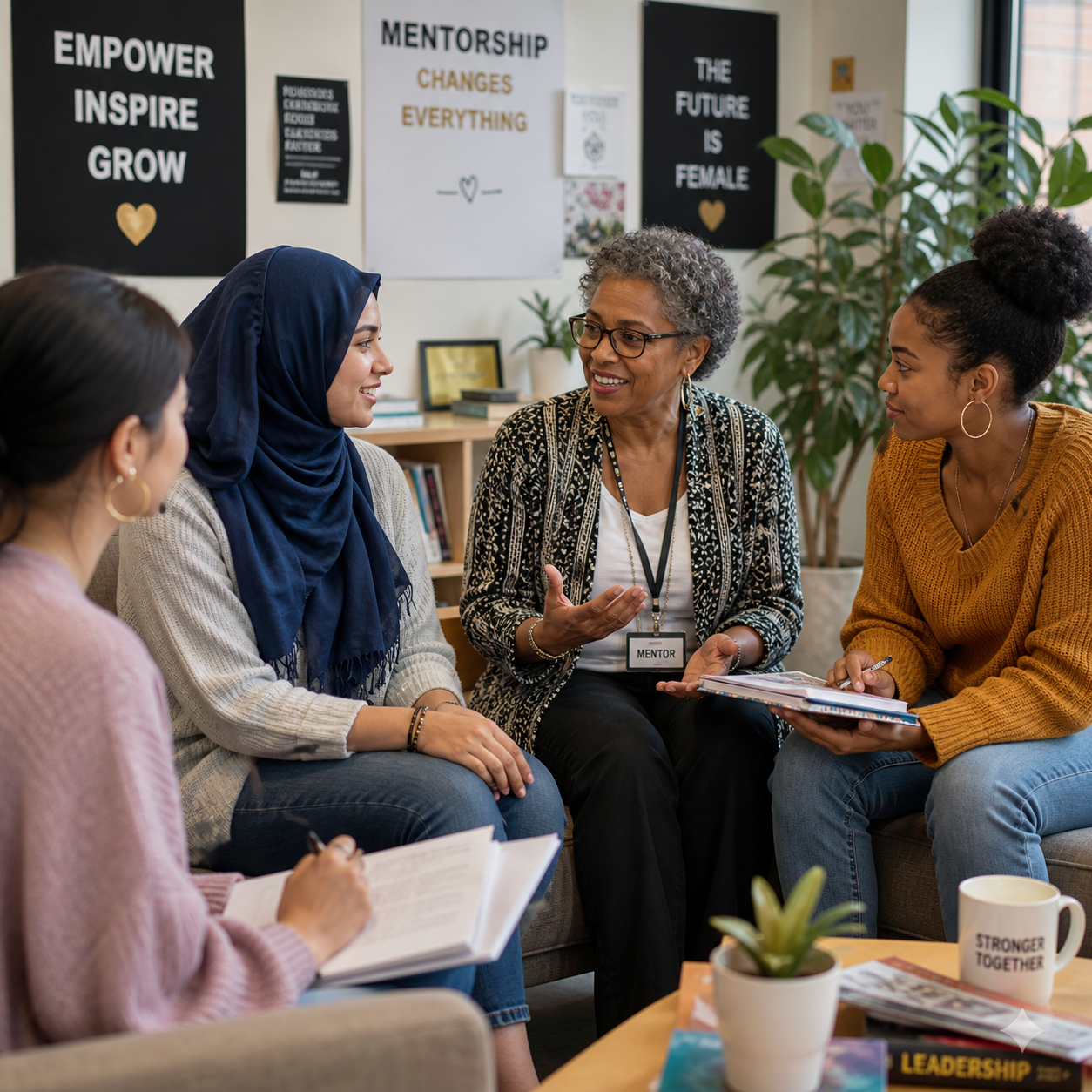
Mentorship programmes can give young women and girls trusted guidance, practical tools, and space to define success on their own terms. A consistent relationship with a supportive adult or peer can influence confidence, education, career development, wellbeing, and the choices a participant feels able to make.
Effective girls’ empowerment programmes do not decide what a young woman should become. They help her identify her strengths, explore possibilities, set meaningful goals, and build the skills and networks to pursue them.
Why Mentorship Matters for Young Women
Mentorship matters for young women because it connects personal encouragement with practical guidance and opportunity. A trusted mentor can help a participant turn uncertainty into questions, ambitions into plans, and setbacks into learning.
Young women often make important decisions about subjects, training, work, relationships, and independence while navigating social expectations and unequal access to information. A mentor offers a reliable sounding board. They can listen without taking over, share relevant experience, and introduce perspectives that may not be available at home or school.
Representation also matters. Seeing a woman who has faced familiar barriers can make a future feel more realistic. A role model does not need to have the same background or career as the participant; authenticity, respect, and relatability are often more valuable than status.
- Personal growth: Participants can reflect on values, interests, boundaries, and wellbeing.
- Educational direction: Mentors can discuss study habits, subject choices, applications, and persistence.
- Future aspirations: Conversations can widen awareness of careers, training routes, and community opportunities.
- Agency: Young women remain the decision-makers, with mentoring used to strengthen their choices rather than replace them.
The relationship may be especially helpful when a young woman lacks access to professional networks or has experienced discrimination. Still, mentorship is not a guaranteed solution. Its value depends on trust, consistency, programme quality, and the participant’s own goals.
Building Confidence, Self-Belief, and Resilience
Mentorship builds confidence by giving young women opportunities to recognise strengths, practise new behaviours, and recover from setbacks. Self-esteem usually grows through repeated experiences of being heard, prepared, and capable.
A mentor might ask a participant to describe a challenge she handled well, then help her identify the skills involved. That simple reflection can make abilities such as persistence, empathy, organisation, or creativity visible. Over time, the participant begins to judge herself by evidence rather than by one disappointing grade, rejected application, or difficult conversation.
Useful mentoring activities include:
- Keeping a strengths and achievements record.
- Rehearsing a presentation, interview, or request for support.
- Breaking a large goal into small actions that can be reviewed weekly.
- Discussing mistakes without shame and identifying the next practical step.
- Using reflective questions such as, What did you learn, and what would you try differently?
This approach encourages a growth mindset: skills can develop through practice, feedback, and support. It also avoids empty praise. Specific feedback, such as recognising clear communication in a difficult discussion, is more useful than general reassurance.
Confidence should not be treated as a requirement before action. A strong mentor helps a young woman act while uncertainty is still present, then reflect on what happened. That creates resilience grounded in experience.
Supporting Education and Career Ambitions
Mentorship supports education and career ambitions by linking goal setting with information, practice, and access to opportunities. A mentor can help a young woman compare options and create a realistic plan without narrowing her future to one definition of success.
Goal setting works best when it is specific and flexible. Instead of saying, “I want a good career,” a participant might decide to research three environmental careers, speak with one professional, and identify the qualifications each route requires. The mentor can then help review progress, adapt the plan, and celebrate effort as well as outcomes.
From aspiration to opportunity planning
A practical mentoring conversation can cover:
- Academic interests, study routines, and support needs.
- Career exploration through job descriptions, workplace visits, or informational interviews.
- Applications for scholarships, internships, volunteering, apprenticeships, or training.
- CV writing, interview preparation, digital skills, and professional communication.
- Questions about workplace culture, pay, progression, and healthy boundaries.
Mentors may also open doors by sharing reliable information or making introductions, but access must be handled fairly. A programme should not depend entirely on one mentor’s contacts. It should build broader partnerships with schools, employers, colleges, community organisations, and training providers.
Career development is only one part of a young woman’s future. Education, financial understanding, health, relationships, creativity, and personal fulfilment may matter just as much. Mentoring should follow the participant’s priorities rather than impose an adult’s preferred path.
Developing Leadership and Life Skills
Mentorship develops leadership and life skills through guided practice in communication, decision-making, problem-solving, teamwork, and responsibility. Young women learn leadership by taking meaningful action, receiving feedback, and seeing that their contributions can influence others.
For example, a mentor might support a participant who wants to organise a community event. Together, they can identify the purpose, create a budget, delegate tasks, manage risk, and review the outcome. The participant practises leadership in a real setting rather than simply hearing a definition of it.
Common skills developed through mentoring include:
- Communication: expressing an idea clearly, listening actively, and handling disagreement.
- Decision-making: weighing evidence, consequences, values, and available choices.
- Problem-solving: defining a challenge, generating options, testing an approach, and revising it.
- Teamwork: sharing responsibility, recognising different perspectives, and resolving conflict.
- Self-management: planning time, managing pressure, and asking for help early.
Life skills are particularly powerful when connected to a participant’s interests. A sports project may develop teamwork; a creative project may strengthen presentation skills; a peer campaign may build organising and advocacy experience. The mentor’s role is to make that learning visible and transferable.
The Power of Positive Role Models and Supportive Networks
Positive role models and supportive networks help young women feel that they belong, their perspectives matter, and their ambitions are worth pursuing. Mentorship becomes stronger when a one-to-one relationship connects with peers, families, educators, and the wider community.
Peer connection can reduce isolation and create a space where participants exchange practical advice. Group sessions might include discussions about confidence, financial literacy, public speaking, wellbeing, or navigating stereotypes. Participants can learn from one another while developing friendships and collaboration skills.
Networks also expand the range of support available. A mentor may help a young woman identify a teacher, careers adviser, youth worker, or specialist service when an issue falls outside the mentor’s expertise. This is safer and more effective than expecting one person to provide every form of help.
Inclusive programmes should reflect differences in culture, disability, sexuality, class, faith, geography, and family experience. Representation is meaningful when it is paired with respect and practical access. Transport, technology, language, scheduling, and financial barriers can determine whether a participant is genuinely included.
What Makes a Mentorship Programme Effective?
An effective mentorship programme combines safe relationships, trained mentors, consistent communication, personalised goals, and clear safeguarding procedures. Good intentions alone cannot create reliable support.
Core features to look for
- Safety and safeguarding: Clear boundaries, reporting routes, consent practices, appropriate supervision, and background checks where required.
- Training: Mentors need preparation in active listening, inclusion, adolescent development, confidentiality, power dynamics, and referral procedures.
- Careful matching: Interests, communication preferences, location, language, and participant choice should inform the match.
- Consistency: Regular meetings and predictable contact help trust develop. A programme should explain what happens if a mentor becomes unavailable.
- Personalised goals: Participants should help define success and review goals as their circumstances change.
- Feedback and evaluation: Attendance, participant feedback, skill development, and wellbeing indicators can reveal what is working and what needs adjustment.
Organisations should avoid three common mistakes. First, matching people quickly without checking expectations can produce an awkward or unsuitable relationship; a structured introduction and early review can correct this. Second, treating confidentiality as unlimited may create safety risks; programmes should explain its boundaries from the beginning. Third, measuring success only through university admission or employment overlooks confidence, belonging, education, and personal wellbeing.
There is also a practical trade-off. More supervision and training require time and funding, but reducing those safeguards can place participants and mentors at risk. Quality should be protected before a programme expands.
Creating Lasting Change Through Girls’ Empowerment
Girls’ empowerment creates lasting change when mentorship strengthens a young woman’s agency and connects individual progress with community opportunity. Participants can use new confidence, skills, and relationships to influence their education, families, workplaces, and local communities.
Lasting change begins with ownership. A young woman should be able to describe her own goals, question advice, and choose which opportunities fit her values. The programme can provide tools and encouragement, while she remains the author of her future.
Families, schools, employers, charities, and public services all have a role. They can fund accessible programmes, offer safe spaces, provide work experience, listen to participant feedback, and remove barriers that mentoring alone cannot solve. A conversation with a mentor cannot compensate for unaffordable transport, discrimination, unsafe housing, or unequal education access. Those structural issues require wider action.
For potential participants, a useful first step is to ask what support is offered, how mentors are trained, how safety concerns are handled, how often meetings occur, and whether young women help shape the programme. Supporters can contribute time, specialist workshops, funding, introductions, or evaluation expertise.
When designed with care, mentorship programmes give young women more than advice. They create a dependable setting for reflection, practice, connection, and choice. That combination can help a girl see possibilities, prepare for them, and pursue a future that reflects her own ambitions.
Frequently Asked Questions
What is a mentorship programme for young women?
A mentorship programme for young women is a structured initiative that connects girls or young women with trained mentors for regular guidance, goal setting, skills development, and encouragement. It may include individual meetings, group activities, peer support, workshops, and referrals to specialist services.
How does mentorship improve confidence?
Mentorship can improve confidence by giving young women a trusted space to speak, identify strengths, practise skills, receive specific feedback, and reflect on progress. Results vary, and confidence grows most reliably when encouragement is combined with real opportunities to act.
What skills can young women develop through mentoring?
Participants may develop communication, leadership, teamwork, problem-solving, decision-making, time management, goal setting, interview technique, digital skills, and self-advocacy. The exact skills depend on the programme and the participant’s interests.
How can someone join or support a girls’ empowerment programme?
Potential participants can contact local schools, youth organisations, charities, community centres, or girls’ empowerment programmes and ask about eligibility, meeting arrangements, safeguarding, and costs. Supporters can volunteer after training, provide funding, host workshops, offer opportunities, or help improve access.
What should organisations look for in an effective mentorship programme?
Organisations should look for trained and supervised mentors, safe and inclusive procedures, participant-led goals, careful matching, regular communication, transparent safeguarding, accessible delivery, and meaningful evaluation. A strong programme also explains its limits and refers participants to professional services when needed.