Creating Safe Spaces for Girls to Express Themselves
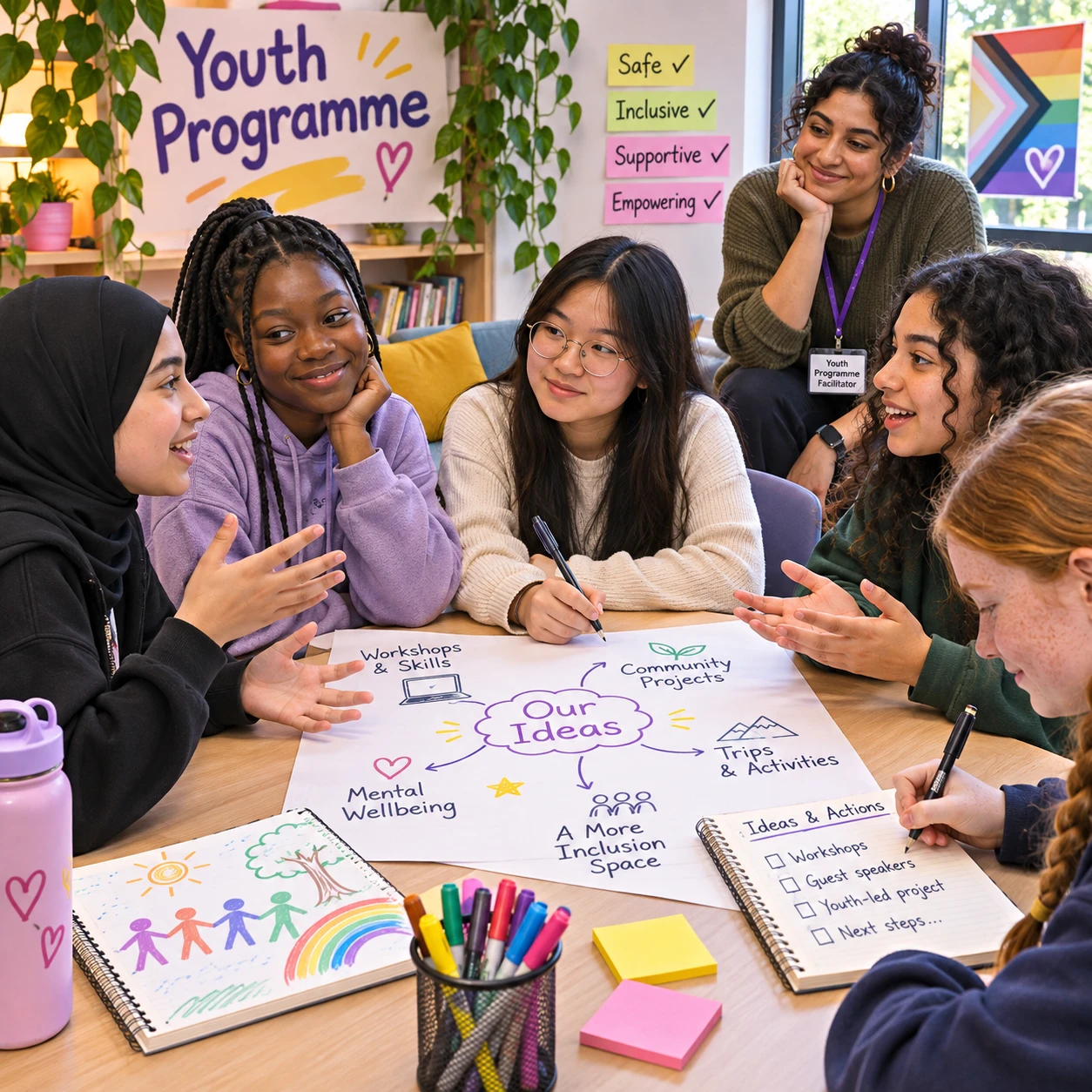
Every girl should have opportunities to share her ideas, feelings, and identity with dignity. In a girls’ empowerment programme, creating safe spaces for girls to express themselves takes more than arranging chairs in a circle. It means building trust, respecting boundaries, making participation accessible, and responding responsibly when someone raises a concern.
Safety cannot mean that nobody ever feels uncomfortable or that difficult experiences will never arise. It means girls know what to expect, have choices about how they take part, and can seek help from adults who listen and follow through.
What a safe space means for girls
A safe space for girls combines physical wellbeing with emotional respect, inclusion, and clear boundaries. Girls should be able to participate without being mocked, pressured, excluded, or exposed to preventable harm.
Psychological safety develops when girls can ask questions, make mistakes, disagree respectfully, or choose not to share personal information without fearing humiliation. Physical safety matters too: the venue should be accessible, appropriately supervised, and arranged so participants can move around and get help when needed.
Safety is experienced differently by each girl. Age, disability, culture, language, gender identity, past experiences, and comfort in groups can all shape what feels welcoming. A loud icebreaker may energize one participant and overwhelm another. Facilitators should check the setting and offer choices rather than assume one activity suits everyone.
A useful test is to ask: Can each girl understand the expectations, make meaningful choices, and get support if something goes wrong? A safe space does not promise a perfect experience. It creates reliable ways to prevent harm, address disrespect, and restore a sense of dignity.
Why self-expression matters
Self-expression gives girls ways to communicate what they think, feel, value, and imagine. When adults and peers listen respectfully, girls can practise agency and take part in decisions that affect them.
Being heard can support confidence and a stronger sense of identity, but it is not a quick fix or a guaranteed outcome. One conversation will not remove barriers a girl faces at home, school, or in her community. Still, repeated experiences of being taken seriously can help her see that her perspective belongs in the room.
Expression also takes many forms. A girl may speak in a group, write privately, create art, ask a question anonymously, or contribute through a small-group activity. Choice matters: the aim is to make voice possible, not to make public speaking the measure of courage or engagement.
In an empowerment programme, facilitators can connect expression to action by asking girls what they want to explore or change, then showing how their feedback shaped the next activity. That link between voice and response helps build agency without suggesting girls alone are responsible for solving larger problems.
Build trust through clear expectations
Trust grows when a group agrees on understandable expectations and adults apply them consistently. Explain how members will treat one another, what privacy means, and what will happen if someone raises a safety concern.
At the start of a programme, invite girls to help shape a short set of group agreements. Keep the language age-appropriate and revisit it when the group changes. Agreements might include:
- Listen without interrupting, and challenge an idea without insulting the person.
- Do not repeat someone’s personal story outside the group without permission, except when an adult must act to protect someone.
- Ask before touching someone, borrowing belongings, or sharing their image or work.
- Everyone may pass on an activity or take a break without having to explain why.
- Tell a trusted adult if someone may be at risk of harm.
Be careful with promises of secrecy. A facilitator should not guarantee absolute confidentiality; they may need to share information with designated safeguarding staff if a girl may be unsafe. Explain this limit before sensitive conversations, using calm, clear language. Predictability builds trust because girls know what adults can keep private and what they must do next.
Make participation inclusive and flexible
Inclusive participation means offering more than one way to contribute and making it acceptable to observe or pass. Flexible formats help girls with different communication styles, confidence levels, languages, and access needs take part.
For example, after asking a question, give everyone a quiet minute to think before inviting responses. Girls can then speak, write a note, draw an answer, discuss in pairs, or place a response anonymously in a box. Make materials accessible and check whether participants need translation, a quieter space, movement breaks, or another adjustment.
Notice the pattern of participation, not just the total number of comments. Are the same confident voices answering first? Do some girls get interrupted, or does an activity rely on reading aloud? A facilitator can offer a round where each person may contribute once, while making clear that passing is fine.
Choice should not become another demand. Asking a girl to explain why she is quiet can make her feel singled out. Instead, offer options to the whole group and let each participant decide what works for her. Peer support can help when girls practise encouragement and respectful turn-taking, but adults remain responsible for addressing exclusion or harmful behavior.
Listen without judgment or pressure
Active listening means giving a girl your attention, acknowledging what she says, and letting her decide how much to share. Adults can encourage conversation with open questions, patience, and calm responses rather than probing for details.
Try questions such as, “What would you like me to understand?” or “What kind of support would help right now?” If a girl shares a feeling, you might say, “That sounds difficult,” or “Thank you for telling me.” These responses recognize her experience without claiming to know exactly how she feels.
Avoid rushing to solve the problem, arguing with her account, or asking leading questions. Silence can be useful; give her time to think. Do not press for a personal story to make an activity feel meaningful. Consent applies to conversation: a girl can decline to answer, change the subject, or stop sharing.
Facilitators should also be aware of their own reactions. Visible shock, blame, or promises to fix everything can make a girl feel responsible for the adult’s emotions. Stay steady, thank her for speaking, and be honest about what you can do next.
Respond responsibly to concerns
If a girl shares a concern about harm or feeling unsafe, respond calmly, listen without judgment, and follow your organisation’s safeguarding procedures. Do not investigate the situation yourself or promise that you will keep the disclosure secret.
A practical response is to:
- Listen and reassure: Thank her for telling you and make clear that seeking help was the right step.
- Check immediate safety: Ask whether she is in danger right now and whether she needs urgent help. Use your organisation’s emergency process if needed.
- Explain what happens next: Tell her, in plain language, which safeguarding lead or responsible adult you need to contact and why.
- Share information appropriately: Follow local law and organisational policy. Pass on only what is needed to the designated people who can act.
- Record and follow up: Make a factual record according to policy, and check that the agreed support has been provided.
Do not ask detailed or repeated questions, confront the person accused, or conduct your own inquiry. Those actions can distress the girl and interfere with the proper response. Trauma-informed practice prioritizes safety, choice, trust, collaboration, and empowerment while recognizing that each person’s needs differ.
Organisations should train staff and volunteers, name a safeguarding lead, and provide clear reporting routes. For a general overview of child protection principles, consult the UNICEF child protection resources; always follow the laws and procedures that apply in your location.
Keep improving the space
A safe space stays responsive by inviting feedback, noticing who is being heard, and adjusting activities when girls’ needs change. Ask for feedback in ways that do not require public disclosure, such as anonymous notes, a brief check-in, or a private conversation with a trusted adult.
After each session, facilitators can reflect on three questions: Who contributed, and who may have been left out? Did anyone seem uncomfortable or unable to take part? What is one practical change for next time? Then tell the group what you changed and why. Feedback has little value if girls never see it lead to action.
Some adjustments may take time or resources, and not every request can be met immediately. Be transparent: explain what can change now, what needs planning, and how girls can raise the issue again. Consistent follow-through makes trust more credible than a promise that every session will be perfect.
Creating safe spaces for girls to express themselves is ongoing work. Clear boundaries, active listening, flexible participation, and responsible safeguarding give girls room to speak or pass, connect with peers, and take part on their own terms.