Case Studies: Successful Women-Led Social Impact Initiatives for Girls
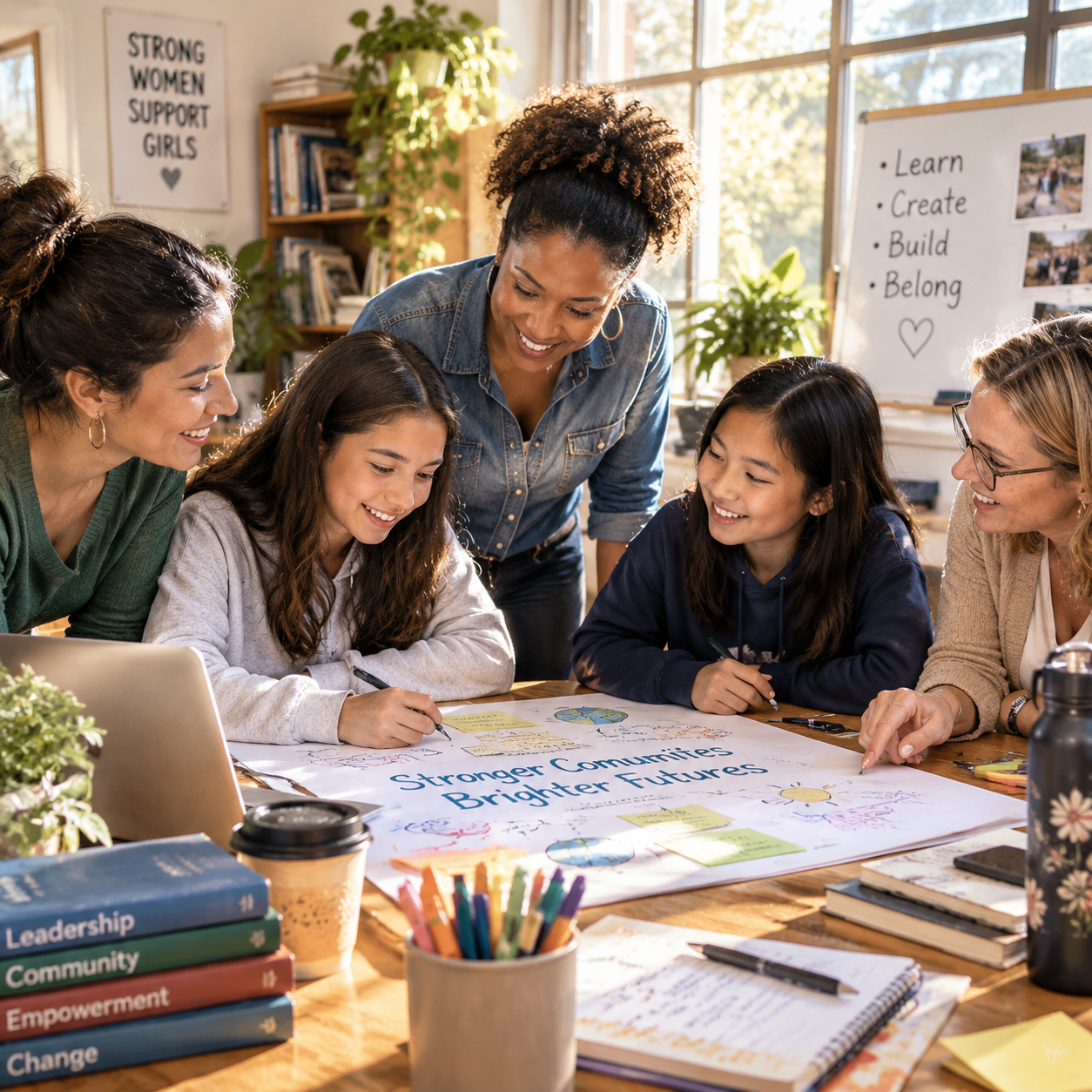
Girls’ empowerment takes more than good intentions. It depends on whether girls can access learning, make choices, build skills, and influence decisions that affect their lives. Women-led social impact initiatives offer useful examples of how programmes can work toward those goals alongside girls, families, and communities.
The initiatives below use different approaches and serve different contexts. Their outcomes should not be treated as guarantees or as a universal formula. Instead, each case offers practical ideas for programme design, from removing barriers to education to creating leadership opportunities and measuring progress.
What makes an initiative women-led and socially impactful?
A women-led social impact initiative is shaped or directed by women, while a socially impactful one responds to a defined need and tracks whether its work makes a meaningful difference. For girls’ empowerment, that means listening to girls and examining changes in access, agency, skills, or opportunity.
Leadership can take several forms: a woman may found an organization, guide its strategy, lead a community programme, or help make decisions with participants. Women’s leadership alone does not prove that a programme is effective. Stronger evidence comes from clear goals, accountable partnerships, and outcomes that matter to the girls involved.
Consider CAMFED, the Campaign for Female Education, founded by Ann Cotton. The organization works with communities in sub-Saharan Africa to support girls’ education and build networks of women leaders, including members of its alumnae association, CAMA. Its model connects educational support with local knowledge and ongoing community involvement. CAMFED reports programme results through its own publications; those figures should be read in context, including the communities and time periods covered.
A useful starting test for any case study is to ask: Who sets priorities? Who benefits? What changes are measured? And do girls have a meaningful voice in decisions? These questions help distinguish a programme designed with girls from one that simply delivers services to them.
Expanding girls’ access to education and learning
Women-led initiatives expand girls’ access to education by identifying practical barriers and responding with support suited to local circumstances. The goal is not only enrolment, but also regular participation, learning, and a realistic chance to continue studying.
CAMFED’s education work provides one example. Its support can include help with school-related costs, while community structures help identify girls who may otherwise be excluded. The approach recognizes that fees and supplies are only part of the problem: distance, safety, household responsibilities, and social expectations can also interrupt a girl’s education.
Room to Read offers another relevant example through its Girls’ Education Program. The programme supports girls in staying in school and developing life skills, with local teams and community involvement playing a role in delivery. Its design reflects a useful principle: academic access and personal development can reinforce each other, but neither should be assumed to solve every barrier on its own.
For programme designers, map the obstacles before choosing activities. A transport stipend may help where distance is the main barrier; it will not resolve unsafe routes or a lack of accessible classrooms. Track attendance and continuation alongside learning measures, and speak with girls who are absent or have left school. Their accounts can reveal problems that enrolment totals miss.
Building confidence, skills, and leadership
Mentorship and leadership opportunities can help girls build confidence, practical skills, and the ability to shape decisions. Effective programmes give participants room to practise agency rather than treating confidence as a trait adults can simply provide.
CAMFED’s CAMA alumnae network connects women who have received educational support and enables some to contribute as mentors and community leaders. This creates a pathway from participation to leadership: girls can see women from their communities taking on visible roles, while alumnae can share experience grounded in local realities.
Girls Who Code, founded by Reshma Saujani, focuses on building girls’ skills and interest in computer science through clubs, programmes, and learning resources. Its work illustrates how leadership development can include technical learning: girls collaborate on projects, practise problem-solving, and encounter career pathways that may otherwise feel distant. Programme availability and experience can vary, so organizers should check what is offered locally rather than assume every participant has the same access.
Mentorship works best when it is structured and reciprocal. Set clear expectations, offer regular meetings, and train mentors in safeguarding and respectful communication. Ask girls what they want from the relationship. Pairing a participant with a role model can be encouraging, but mentorship should not replace qualified teaching, mental-health support, or other specialist services when those are needed.
Creating pathways to economic opportunity
Girls’ programmes can support future economic opportunity by combining education with relevant skills, information, and exposure to a range of choices. They should expand options, not prescribe one definition of success or promise that training alone will secure employment.
Girls Who Code helps participants explore computer science and technology-related skills, which may introduce possibilities in a growing field. The wider lesson is to connect learning activities with genuine routes for further study and work. A short coding workshop, for example, has more value when girls can also find advanced learning, equipment, career guidance, and supportive networks.
CAMFED’s education-to-leadership pathway offers a different perspective. Continued learning can strengthen girls’ choices over time, while alumnae may contribute to their communities and support other learners. Economic opportunity is broader than a first job: it includes the ability to continue education, make informed choices, and participate in decisions about work and resources.
Design for access as well as relevance. Check whether activities fit girls’ schedules, language needs, disability access, and internet availability. Consult local employers and educators, but do not let labour-market demand override girls’ interests. Track intermediate steps, such as course completion or applications to further training, before attributing long-term income changes to a programme.
Working with communities to sustain change
Community partnerships help girls’ empowerment initiatives last by building trust, adapting delivery, and involving people who influence girls’ daily opportunities. Families and local organizations can support change, but girls must remain central to decisions about their own lives.
CAMFED’s community-focused approach shows how local networks can help identify education barriers and support girls over time. Women’s leadership, including alumnae participation, can connect programme goals with community experience. Room to Read also works with local teams and communities in delivering its girls’ education programming, reflecting the value of adapting activities to the places where girls learn.
Partnerships need clear responsibilities. Families may help identify obstacles, teachers can provide insight into attendance and learning, and local organizations may offer trusted spaces or services. A programme should explain how decisions are made, how concerns are handled, and how girls can safely share feedback. Community ownership is not the same as transferring unpaid work to women and girls; roles and resources should be agreed openly.
To sustain a programme, plan for changes in staff, funding, and local conditions. Document essential practices, train more than one community contact, and create a realistic handover plan. Local ownership can strengthen continuity, though it cannot replace adequate funding or public services where these are necessary.
Lessons for designing effective girls’ empowerment programmes
Effective girls’ empowerment programmes start with local priorities, give girls influence, and measure progress against clear goals. The cases above suggest a practical cycle: listen, adapt, support, and assess.
- Listen before selecting an intervention. Ask girls about barriers, ambitions, and safety. Include those who are out of school or less visible in community meetings.
- Connect activities to a specific outcome. Link mentorship to a skill or decision-making goal, and connect education support to attendance, learning, or continuation.
- Share power and responsibility. Involve girls and local women in programme design, while providing training, safeguarding, and appropriate compensation for their work.
- Measure more than participation. Numbers enrolled or attending show reach. They do not, on their own, show learning, confidence, agency, or sustained opportunity.
- Adapt when evidence points to a problem. If attendance improves but girls still leave school, investigate why instead of repeating the same activity at greater scale.
A simple measurement plan can combine a baseline, regular check-ins, and an end-of-cycle review. Choose a small set of indicators tied to programme goals, such as attendance, course completion, reported confidence in speaking up, or transitions to further learning. Protect privacy, explain how information will be used, and avoid collecting sensitive data without a clear purpose and safeguards.
One common mistake is treating a successful programme model as a package to copy unchanged. That can ignore language, safety, costs, or local education systems. Use the model’s principles as a starting point, then test whether the activities fit the girls and community involved. Results will vary by context, and honest evaluation includes setbacks as well as achievements.
Frequently asked questions
What qualifies as a women-led social impact initiative?
It is an initiative in which women hold meaningful leadership or decision-making roles and the work addresses a defined social need. For a girls’ programme, look for women’s leadership alongside girls’ participation, clear goals, and evidence of results.
How do women-led programmes support girls’ empowerment?
They may improve education access, provide mentorship, develop leadership and practical skills, or connect girls with further learning and economic opportunities. The strongest approach depends on the barriers girls identify in their own context.
How can a girls’ programme assess its impact?
Set goals and a baseline, then track a mix of participation and outcome measures. Combine records such as attendance or completion with feedback from girls, and use findings to adjust activities while protecting participants’ privacy.
What can communities do to help sustain an initiative?
Families, educators, local organizations, and women leaders can help identify needs, build trust, and support continuity. Agree on roles and resources, create safe ways for girls to give feedback, and keep girls involved in decisions that affect the programme.