Overcoming Gender Stereotypes in Educational Settings: Practical Strategies for Empowering Girls

Every student should be able to explore ideas, develop skills, and imagine a future without being limited by assumptions about gender. Yet gender stereotypes can influence classroom interactions, subject choices, feedback, and expectations in subtle ways. Overcoming gender stereotypes in educational settings requires shared action from teachers, school leaders, families, peers, and girls empowerment programmes.
The goal is not to direct girls toward particular subjects or behaviours. It is to create genuine freedom: freedom to lead, ask questions, take risks, study STEM, express emotion, collaborate, compete, and define success on their own terms.
What Are Gender Stereotypes in Education?
Gender stereotypes in education are assumptions that girls and boys naturally have different abilities, interests, behaviours, or academic potential. These beliefs can shape opportunities even when adults intend to treat every student fairly.
A teacher may unconsciously expect boys to be more confident in science or girls to be more organised in language lessons. A workbook may show men as inventors and women mainly in caring roles. Classroom jobs may assign boys to move equipment while girls decorate displays. Each example seems small, but repeated messages can influence how students understand themselves and others.
Gender stereotypes can affect any student, including transgender, non-binary, and gender-diverse learners. They also intersect with race, disability, socioeconomic background, culture, religion, and sexuality. Girls are not a single, uniform group, so an inclusive approach must leave room for different identities, strengths, needs, and ambitions.
Gender equality in education means that students receive fair access to learning, encouragement, safety, leadership, resources, and progression. Equality does not require identical support. Some learners may need targeted mentoring, accessible materials, or additional opportunities to participate fully.
How Gender Stereotypes Affect Girls’ Learning and Confidence
Gender stereotypes can reduce girls’ participation, confidence, subject choices, leadership opportunities, and expectations for the future. These effects often develop through repeated experiences rather than one clearly identifiable incident.
When girls receive less attention during practical activities or hear that certain subjects are especially difficult for them, they may begin to self-edit. A student who has strong mathematical ability might avoid answering because she expects to be judged. Another may choose subjects based on perceived social approval rather than genuine interest.
The impact can appear in several areas:
- Participation: Girls may speak less often, volunteer for visible tasks less frequently, or defer to louder classmates.
- Self-belief: Repeated doubt from adults or peers can weaken academic confidence, even when performance is strong.
- Subject selection: Stereotypes may discourage girls from choosing physics, computing, engineering, mathematics, or technical vocational courses.
- Leadership: Girls may be praised for being helpful but criticised as overly assertive when they take charge.
- Aspirations: Limited representation can make some careers appear distant, unusual, or incompatible with family and community expectations.
Confidence should not be treated as a personal flaw that girls must fix alone. Students build confidence when environments offer meaningful practice, fair feedback, psychological safety, and evidence that their contributions matter.
Recognising Gender Bias in the Classroom
Gender bias in the classroom becomes easier to address when educators examine patterns in language, attention, expectations, responsibilities, and learning resources. Awareness should support improvement, not blame.
Before a lesson, review the materials. Ask who appears as a scientist, artist, carer, leader, inventor, athlete, or expert. Check whether examples show people from varied backgrounds and whether girls appear as active decision-makers rather than passive observers. Representation in learning materials affects which futures students can readily picture.
During a lesson, notice who receives follow-up questions, who gets interrupted, and who is invited to demonstrate a solution. Teachers may give boys more opportunities to explain technical answers while asking girls to record results or organise the group. Rotate roles deliberately so every student experiences research, presentation, equipment handling, leadership, and support.
Language also matters. Phrases such as girls are naturally more careful or boys are better at building things turn observations into rules. Even positive stereotypes can restrict choice. Replace them with specific feedback: you tested two approaches and explained why the second worked better.
After a lesson, compare participation and outcomes. A simple observation log can record speaking turns, teacher questions, group roles, praise, corrections, and access to equipment. The aim is to identify trends over several lessons, not label individuals after one class.
Creating More Inclusive Teaching Practices
To create an inclusive classroom, teachers should plan equitable participation, use inclusive language, vary learning activities, and assess work against clear criteria rather than gendered expectations.
Plan participation before the lesson
Do not rely only on volunteers, since volunteering often reflects confidence, status, or previous classroom experience. Use structured turn-taking, think-pair-share, rotating spokespersons, anonymous questions, and short written reflections. These methods give quieter students time to develop an answer without removing choice from confident speakers.
Set a practical participation goal, such as ensuring every group member presents one finding during a project. Track whose ideas are acknowledged and invite students to build on one another’s thinking. If a student is interrupted, calmly return the floor: Let’s hear the rest of Maya’s explanation.
Use precise, growth-focused feedback
Feedback should describe evidence and next steps. Instead of praising girls mainly for neatness or effort, recognise reasoning, persistence, creativity, accuracy, collaboration, and leadership. Apply the same standards to all students while offering different routes to improvement.
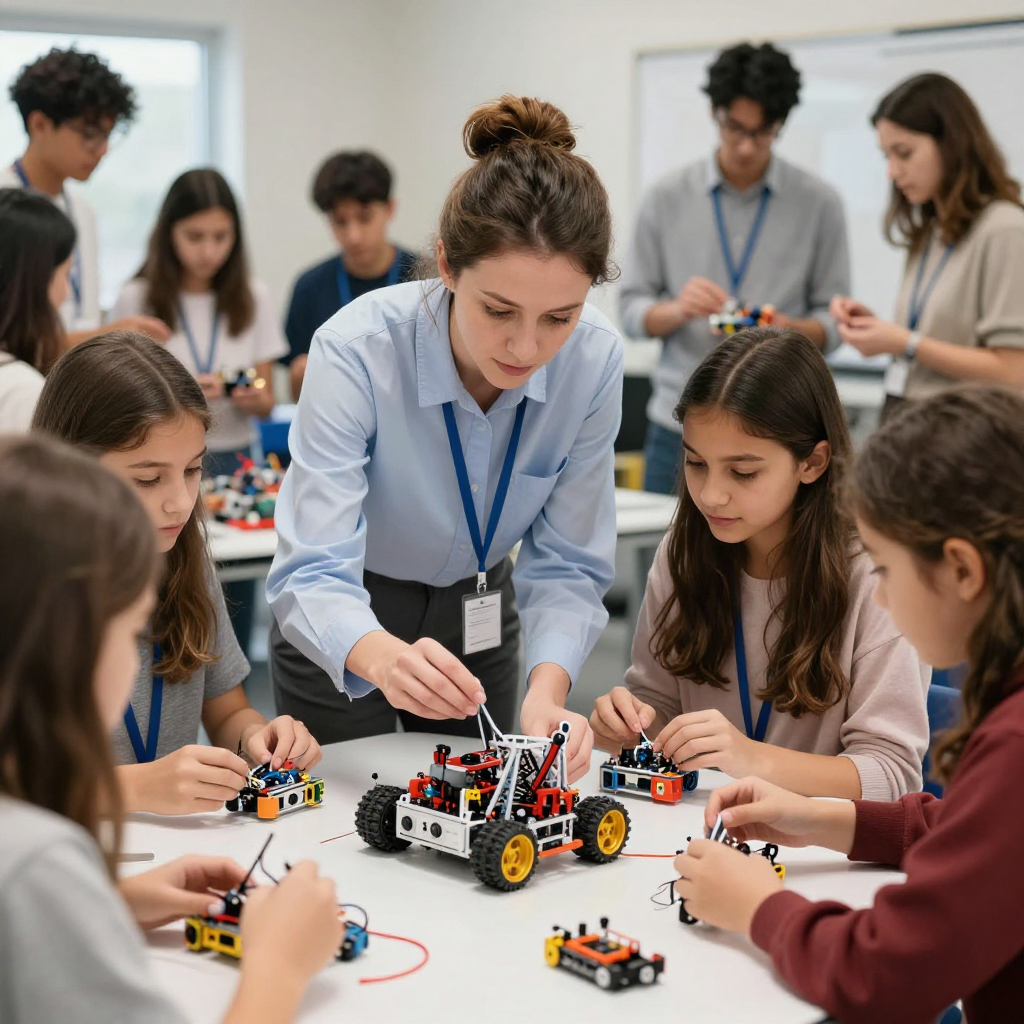
Choosing targeted encouragement for girls in STEM can increase access to practice, but it should not imply that girls are deficient. Pair encouragement with resources, challenging tasks, equipment access, and opportunities to revise work.
Make activities flexible and inclusive
Use a mixture of discussion, design, movement, independent work, practical investigation, performance, and digital creation. Avoid presenting one style of participation as more intelligent or more legitimate. A student who prefers careful observation may contribute as powerfully as one who speaks quickly.
Establish norms that protect curiosity: questions are welcomed, mistakes are part of learning, and disagreement must address ideas rather than identities. This creates space for girls to take intellectual risks and develop student voice and agency.
Improving Representation and Access to Role Models
Representation and role models broaden students’ sense of what is possible by showing women and girls contributing across subjects, professions, cultures, and leadership contexts.
Audit curriculum examples across the year rather than adding one special event. Include women in STEM, women historians, writers, artists, entrepreneurs, engineers, mathematicians, community organisers, and public leaders. Present their methods, decisions, setbacks, and achievements. Students benefit more from a complex human story than from a brief inspirational slogan.
Invite local professionals, university students, former pupils, and community mentors to speak about their routes into study and work. A mentor does not need to have the same background as every participant, but students should encounter a range of experiences. Mentorship can include project advice, career conversations, study skills, and honest discussion about barriers.
Girls’ leadership opportunities should be substantive. Let students design a club, lead a research question, chair a discussion, manage a budget, or present recommendations to school leaders. Rotate access to visible responsibility, and provide preparation so leadership is learned rather than treated as a personality trait.
When selecting materials, educators can consult resources from organisations such as UNESCO’s work on gender equality in education. External guidance can support review, but local student experiences should shape priorities.
How Schools, Families, and Empowerment Programmes Can Work Together
Schools, families, and girls empowerment programmes create stronger change when they share goals, language, and practical support rather than placing responsibility on girls alone.
School leaders can establish clear expectations for respectful behaviour, review access to clubs and enrichment, and provide staff development on unconscious gender bias. Policies matter, but daily routines matter too: who gets equipment, whose concerns receive action, and whether reporting mechanisms feel safe.
Families can encourage exploration without assigning subjects or careers a gender label. Ask what a child enjoyed solving, making, reading, or investigating. Praise persistence and thoughtful decision-making, and challenge stereotypes in media or conversation without shaming relatives or children who repeat them.
Girls empowerment programmes can provide safe spaces, peer support, mentoring, confidence-building, and opportunities to practise leadership. Their strongest contribution often comes when programme learning connects with school life. For example, a student might develop presentation skills in a programme, then use them to lead a science demonstration or contribute to a school improvement meeting.
Partnerships work best when they include student voice. Schools can hold listening circles, anonymous surveys, student advisory groups, or focus sessions about safety, belonging, subject access, and classroom participation. Adults should explain what will happen with feedback. Asking for opinions and then taking no visible action can reduce trust.
Measuring Progress and Sustaining Change
Schools can sustain progress by reviewing participation, experiences, resources, and culture regularly, then adjusting actions based on evidence. Inclusion is an ongoing process rather than a one-time campaign.
Useful measures include:
- Participation in STEM subjects, clubs, competitions, and leadership roles, disaggregated where appropriate and ethically safe.
- Student survey responses about belonging, confidence, fairness, safety, and teacher expectations.
- Classroom observations of speaking turns, group roles, questioning, feedback, and access to resources.
- Representation audits of textbooks, displays, websites, guest speakers, and career examples.
- Progression data, including subject continuation, programme completion, and applications for enrichment or mentoring.
Numbers need context. A rise in girls’ STEM enrolment may be positive, while survey responses could reveal that students feel isolated. Review quantitative information alongside student stories and staff reflection.
A practical framework is notice, test, listen, adjust. Notice a pattern, test a focused change, listen to students and colleagues, then adjust the approach. Assign responsibility, set a review date, and communicate findings. Small changes become cultural change when they are repeated, evaluated, and supported by leadership.
Frequently Asked Questions
What are common examples of gender stereotypes in schools?
Common examples include assuming boys are better at mathematics or engineering, expecting girls to be quieter or more organised, assigning classroom jobs by gender, using gendered career examples, and treating assertive behaviour differently in girls and boys.
How can teachers challenge gender bias in the classroom?
Teachers can track participation, rotate group roles, use inclusive language, check learning materials for representation, apply consistent assessment criteria, and provide specific feedback on reasoning and progress. Student voice can reveal patterns adults miss.
How can schools encourage girls to participate in STEM?
Schools can provide early, hands-on access to STEM, feature women in STEM, offer mentoring, protect equitable equipment access, and create projects connected to students’ interests. Encouragement works best when paired with high-quality teaching and real opportunities to practise.
What role do mentors and role models play in girls’ empowerment?
Mentors and role models make possible futures more visible, offer practical guidance, and help girls interpret setbacks as part of learning. Effective programmes provide regular contact, clear boundaries, and opportunities for students to lead rather than simply listen.
How can families support gender equality in education?
Families can avoid labelling subjects and activities as masculine or feminine, provide access to varied books and experiences, ask open questions about interests, challenge limiting messages, and support children’s choices while staying attentive to their wellbeing.
Overcoming gender stereotypes in educational settings is shared work. When classrooms offer fair expectations, representative materials, meaningful leadership, and supportive relationships, girls gain more room to participate and imagine ambitious futures. The wider benefit reaches every student: education becomes a place where ability is developed, identity is respected, and opportunity is not narrowed by assumption.