The Role of Art and Music in Empowering Adolescent Girls
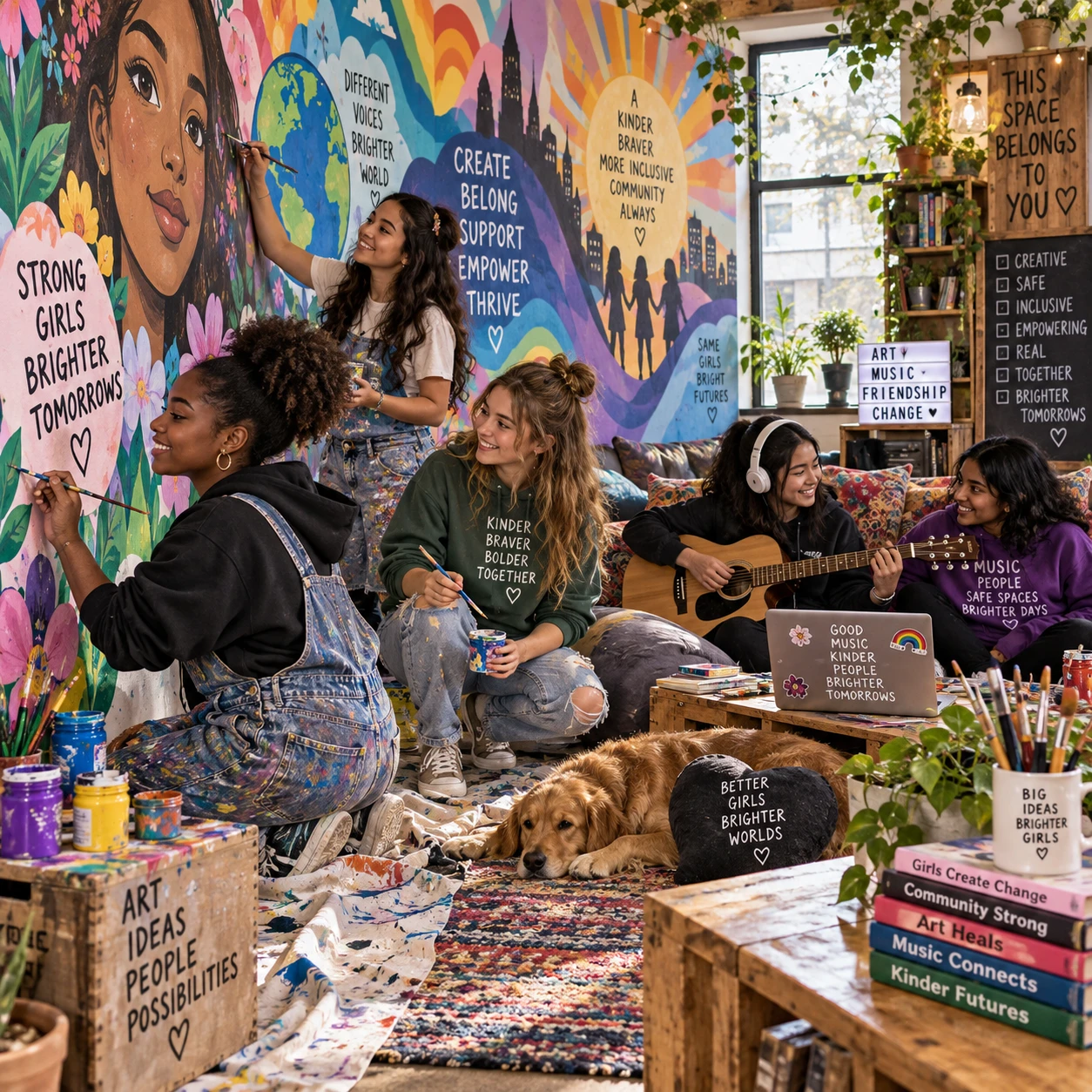
Adolescence brings new questions about identity, relationships and the future. Art and music give girls practical ways to explore those questions, share ideas and connect with one another. In girls’ empowerment programmes, creative expression can support self-confidence and agency when activities are welcoming, optional and shaped by participants themselves.
Why creative expression matters during adolescence
Creative expression gives adolescent girls ways to explore who they are, what they feel and what matters to them. Visual arts, music and other creative activities can open conversations that may be difficult to begin with direct questions alone.
A drawing, collage or song can help a participant put an idea into a form she can examine and, if she chooses, share. She might create a picture of a place where she feels at ease, or write a few lines about a change she hopes to see. The work does not need to be polished or explained to have value.
That freedom matters because girls are not a single audience with identical interests or experiences. Some may want to speak openly; others may prefer to work quietly, observe or participate through practical tasks. A range of options lets each girl find a comfortable starting point.
Creative activities are not a guaranteed fix for stress or other challenges, and they should not be presented as a substitute for professional support. Their role is more grounded: they offer space for choice, expression and reflection within a broader programme that also builds skills, relationships and access to support.
How art and music can strengthen confidence and agency
Art and music can strengthen confidence by giving girls chances to make decisions, develop skills and see their ideas take shape. When participants choose what to create and whether to share it, they practise voice and agency in a concrete, low-pressure setting.
Confidence often grows through small moments: selecting colors for a poster, suggesting a rhythm for a music circle, or revising a lyric until it sounds right. These choices show that a girl’s perspective can guide the process. Facilitators can reinforce this by asking questions such as, “What would you like this piece to say?” rather than judging whether it is good.
Voice is more than speaking in front of a group. A participant might express an opinion through a photograph, a beat, a movement or a line of songwriting. Letting girls choose their medium can make participation possible even for those who are shy, still learning the group’s language or unsure how much they want to disclose.
Sharing work should remain an invitation, not a test of confidence. Displaying artwork or performing can feel affirming for some girls and uncomfortable for others. Offer alternatives, such as sharing with a partner, keeping a piece private or describing the process without presenting the result. Respecting those choices helps build agency rather than adding pressure.
Building connection through shared creative activities
Shared creative activities can help adolescent girls build peer connection by giving them a common task that depends on listening, cooperation and respect. A group mural or songwriting exercise can create opportunities to contribute without requiring everyone to communicate in the same way.
In a collaborative project, girls can negotiate colors, themes, roles and decisions. One participant may sketch, another may mix paint, and someone else may keep track of ideas. Those roles can help participants notice one another’s strengths and make room for different kinds of contribution.
Music circles can work similarly. Participants might take turns choosing a song, create a simple group rhythm or share music that matters to them. A facilitator can invite the group to listen for what a song communicates, while making clear that no one has to explain personal experiences behind a choice.
Group work does not automatically create belonging. Existing friendships, differences in confidence, accessibility needs or disagreements can affect who gets heard. Set simple norms together: make room for each person’s ideas, ask before using someone else’s work, and let participants pass. These practices help make collaboration safer and more balanced.
Putting art and music into girls’ empowerment programmes
Girls’ empowerment programmes can use art and music through short, adaptable activities that connect creative choices to participants’ interests and goals. Start with accessible materials, explain the options and leave room for girls to decide how much they want to take part.
- Community mural: Invite small groups to create images around a shared theme, such as hopes for the future or what makes a supportive community. Agree on the theme and display plan together.
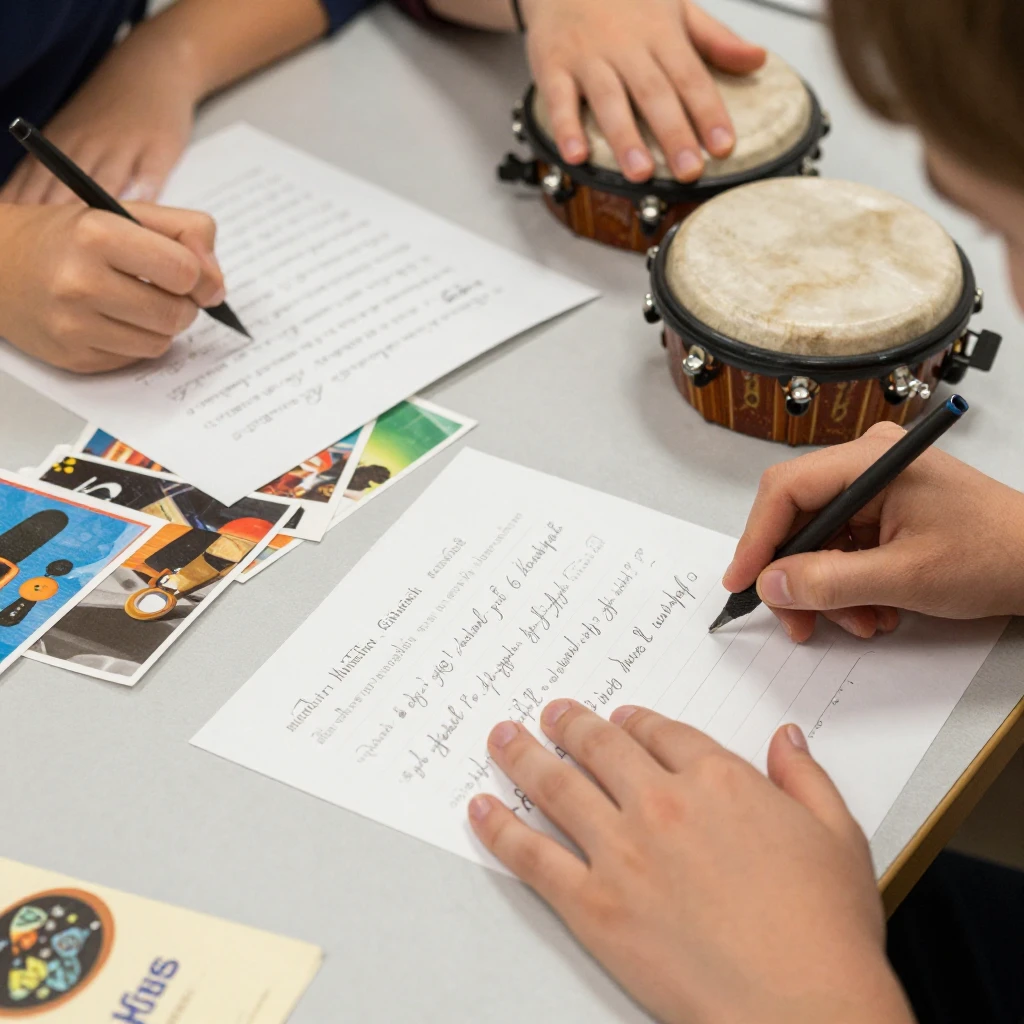
- Music circle: Let participants bring a song, choose from a prepared playlist or make rhythms with simple instruments and everyday objects. Listening can count as participation.
- Songwriting or lyric remix: Offer a prompt about friendship, boundaries or a change girls would like to see. Participants can write alone, work in pairs or contribute a single word or line.
- Collage or personal symbol: Provide magazines, paper and drawing supplies so girls can represent a strength, interest or goal without needing specialist materials or technique.
Keep sessions flexible. A 30-minute activity might include a brief introduction, 15 minutes of making, and a voluntary closing reflection. If a prompt feels too personal, switch to a fictional character, a community theme or a purely playful task. The aim is to offer a meaningful choice, not to produce a finished performance or exhibit.
Creating an inclusive and supportive environment
An inclusive creative space makes participation accessible, culturally responsive and free from pressure to perform. Facilitators can do this by offering meaningful choices, setting clear group agreements and treating every contribution with respect.
Before an activity, explain what will happen, what materials are available and whether anyone will be asked to share. Ask about access needs, including mobility, sensory preferences, language and the need for quiet space. Where possible, provide different ways to participate: making, planning, observing or helping with setup.
Do not assume artistic skill or confidence. Demonstrate one simple starting point, then let girls adapt it. Avoid ranking work, correcting someone’s style or treating a personal piece as a problem to interpret. Feedback should focus on what the creator wants others to notice, not on whether the work meets an adult standard.
Cultural responsiveness also means asking rather than guessing. Music that feels familiar and uplifting to one participant may not suit another. Invite girls to suggest materials, themes and music, and check whether photographs, recordings or public displays are acceptable. Get clear permission before documenting or sharing anyone’s work.
Creative activities can surface strong feelings. Facilitators should not press girls to disclose private experiences, and should know how to connect a participant with appropriate support if she asks for help. That boundary keeps creative expression within its proper role in an empowerment programme.
Noticing impact and adapting activities
Programmes can understand what is working by asking girls what felt engaging, comfortable and worth doing again. Brief reflection helps facilitators adapt activities to participants’ interests without treating artistic output as a measure of confidence or wellbeing.
Try a simple closing check-in: “What would you keep, change or try next time?” Participants can answer aloud, write a note, place a mark on a feedback scale or pass. Ask about the process as well as the product: Did everyone have a way to contribute? Was the activity too structured, too open or about right?
Look for practical signals over time, such as girls initiating ideas, taking on different roles, collaborating across friendship groups or choosing to return to an activity. These observations can guide planning, but they are not proof that art or music caused a particular personal outcome. Attendance, comfort and preference vary, so use direct feedback alongside facilitator observations.
When an activity misses the mark, make a small adjustment rather than assuming the group is uninterested in creativity. A performance-based exercise might become private songwriting; a long mural project might be replaced with individual postcards. The useful question is not whether every girl enjoys the same medium, but whether the programme gives each girl a genuine chance to express herself and shape what happens next.